12 from the Underground
collaborative project with Kristina Faragher
watch "107 from Baby Doe"

watch "Flowers for McGillycuddy"
watch "Silence for Herbert"
watch "A Trumpet for Hickory"
 watch "Songbirds for Anne Messing"
Visual Artists Kristina Faragher and Curt LeMieux are working collaboratively on a series of twelve videos. "Twelve from the Underground," provides a unique perspective on historical notions of the American West through the investigation of randomly selected individual lives. The duo begins each piece in the series by randomly picking a date from the early to mid-nineteen hundreds and a location in the United States west of the Mississippi River. The artists use Internet based search engines and agree to center a given video upon the very first individual located who died within the specified parameters. Biographical accounts and other historical information guide the work both conceptually and aesthetically. The imagery is deliberately meditative and often abstract or sketchy, as the artists believe that the series should function outside of the typical language and narrative structures. The work should remain open to a host of interpretations, just as notions of history should remain in a state of flux. Faragher and LeMieux have no interest in literal interpretation of historical texts via a sort of video art documentary but rather seek to provide a sequence of symbols and prompt imagination and inquiry.
Amy Scott, Curator of Visual Arts at the Autry National Center, Los Angeles, states that "Twelve from the Underground," succeeds because it occupies a liminal or transitional space between historical opposites including: realism vs. abstraction; notions of "authenticity" vs. images that change over time; diligent research vs. interpretive methods, and the use of primary sources vs. the ephemeral aspects of digital media. Scott explains that Faragher and LeMieux manage to address Western history in a way that exposes the gaps and tensions inherent but often hidden within that process. Scott analyzes the causal trajectory within conventional Western history and the intentionally impressionistic approach to "Twelve from the Underground." Please click here to watch Amy Scott discuss "Twelve from the Underground."
"Flowers for McGillycuddy" is based on the life and times of Valentine Trant O'Connel McGillycuddy a physician and land surveyor who acted as the nations first "Indian Agent" for the Red Cloud Agency in the Black Hills of South Dakota in the late 1800's. The Lakota Sioux named Valentine a "Friend of Crazy Horse” after the Native American Chief allowed McGillycuddy to administer western medicine to his ailing wife. McGillycuddy was present when an infantry guardsman fatally wounded Crazy Horse and the physician provided morphine to the fallen warrior on his deathbed. McGillycuddy was considered a controversial pioneer in the effort to build a sustainable relationship between the United States and the Native American people. As a result of these actions, he was heavily investigated by the Bureau of Indian Affairs. "Flowers for McGillycuddy" features performances and musical contributions from Fitter, Noa Winter Lazerus, and Adam Overton.
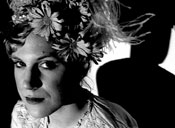
 "107 for Baby Doe" is centered upon Elizabeth McCourt "Baby Doe" Tabor, who participated in one of the most famous and publicized love triangles of the nineteenth century. She became the "Silver Queen of the West" by marrying an incredibly wealthy mining tycoon named Horace Tabor in 1882. The couple lost their fortune in the silver crash of 1893 when the United States Federal Reserve demonetized silver. Baby Doe spent the remaining years of her life impoverished and living in a small cabin outside the Matchless Mine in Leadville, Colorado. After a series of tragic events including the death of her youngest daughter, Baby Doe became increasingly devoted to the Catholic faith and recorded a series of mystic visions directly on the walls of her home. In early March of 1935, her frozen body was discovered on the floor of her cabin, her arms peacefully crossed on her chest. After a particularly cold spell, she had apparently run out of wood for her stove. "107 for Baby Doe" features performances by Gabrielle Faragher and Barb May.
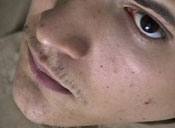
 A convicted murder sentenced to death via gallows is the focal point of “Silence for Herbert.” Herman (Herbert) Young forfeited his life to the state of Arizona at 5:30am on the day of August 21, 1931 in payment for the murder of John Dye, a Tucson cab driver who Young had beaten to death with a wrench. Young was found to be in possession of Dye’s purse containing $73.50. Although he talked with his wife while eating his last meal, Herbert refused to comment on his crime. It was reported that Young went to the noose calmly and kissed a crucifix in preparation for death. He was the last person to be executed by hanging in the state of Arizona. The state switched from gallows to lethal gas in 1934. “Silence for Herbert” features Patrick Kennelly as Herman (Herbert) Young.
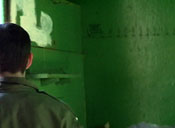
 Ensign Hickory Floed from Portland, Oregon provides the subject for “A Trumpet for Hickory.” Floed was born on August 9, 1903. His father owned a local newspaper and he was the great grandson of General Joseph Lane, an American general during the Mexican-American War and a United States Senator from Oregon. Destined for a life of military and political service, as a young man Hickory participated in military training in the state of Idaho, He received an appointment to the United States naval academy by congressman Addison T. Smith in the first part of 1926. The young ensign died tragically on November third of that year when his airplane struck another machine at 3000 feet. The pilot jumped at about 200 feet but his parachute failed to open. The other plane landed safely. “A Trumpet for Hickory” features Asher Hartman.
 “Songbirds for Anne Messing” was created in response to an obituary that ran in the Adams County Leader and a death certificate from the state of Idaho dated May 10, 1932. According to these documents, Anne P. Messing had suffered for years with hardening of the arteries and she died of cardiac failure in her home on April 28, 1932. Anne was born in Germany She immigrated to the United States with her husband Frank in 1898 at the age of 32. The couple settled in Mesa, Idaho in 1917 and successfully operated a fruit orchard. “Songbirds for Anne Messing” features a performance by Laura Bierma.
 Charles Jesse Jones, better known as “Buffalo” Jones, serves as the central character in “An Electronic Voice for Charles Jesse.” Jones is considered to be the quintessential frontier cowboy. He was a buffalo hunter on the Great Plains in the 1870’s. Later in life, Jones came to bemoan the demise of the American Bison and he lamented his role in their slaughter. He sought to save the species from extinction by gathering buffalo calves and raising them on his ranch in Kansas. The capture of live animals became an obsession with Jones and he soon became famous for this skill. He formed a friendship and rivalry with Theodore Roosevelt who assigned him to be first game warden of Yellowstone National Park. The video features a performance by Robert Jacka as Buffalo Jones.
